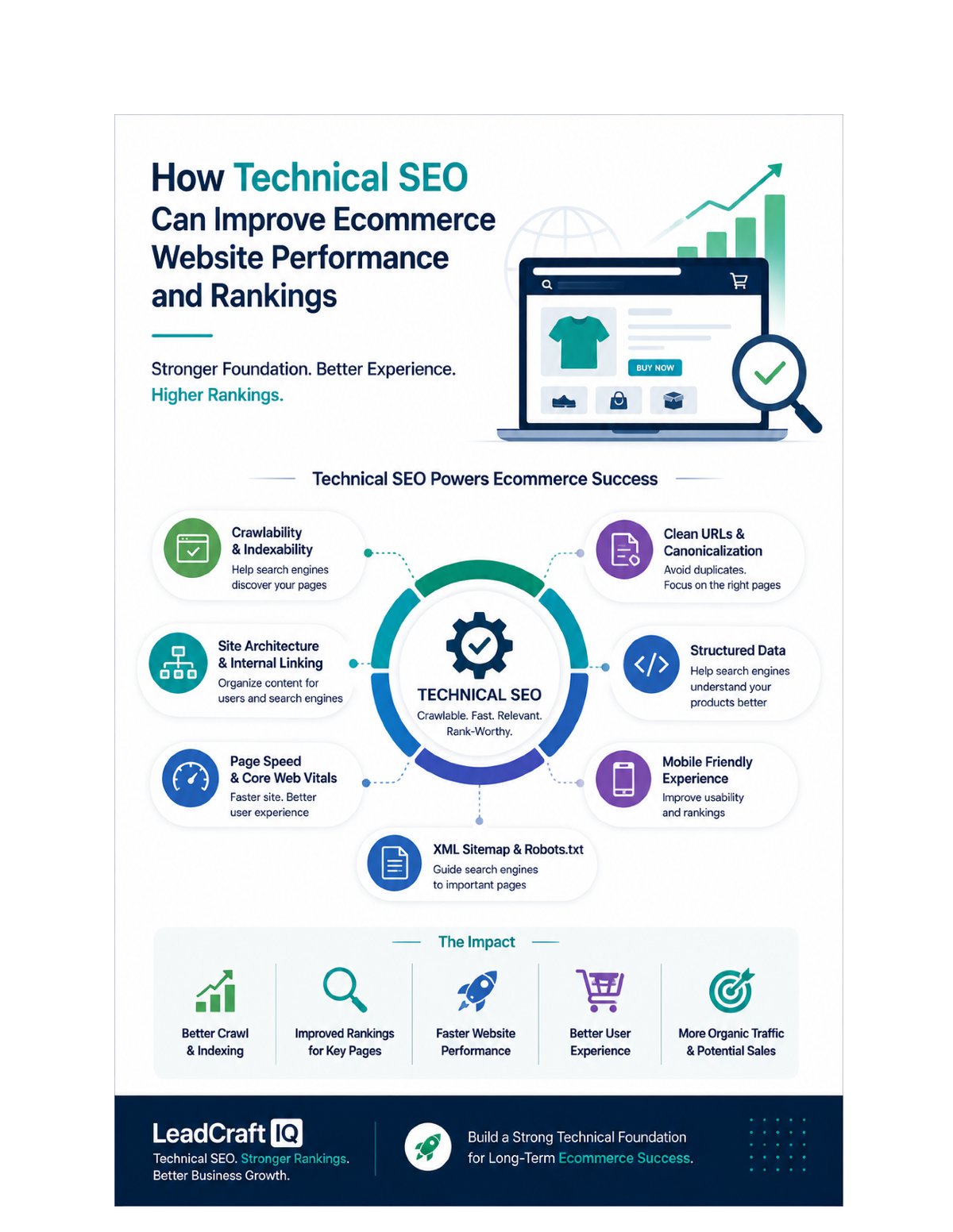
1. Overview: The Invisible Technical Barriers
For growing businesses, strong organic visibility can become an important source of qualified leads. But technical problems can prevent search engines from efficiently crawling, indexing, and ranking valuable pages.
A hypothetical B2B technology company, Company A, was generating website traffic through content and service pages but struggled to turn its organic presence into consistent lead generation. A structured technical SEO audit helped identify the underlying issues and create a prioritized roadmap for improvement.
2. Business Challenge
Company A had expanded its website rapidly as it added new services, resources, and industry pages. However, its organic performance had started to decline.
The company was dealing with several technical SEO issues, including:
- Important pages not being indexed consistently: Key service offerings were dropped from search indexes due to crawl budget constraints.
- Duplicate and missing canonical tags: Competing URLs diluted domain authority across parameter variations.
- Broken internal links: Outdated navigation links generated 404 errors for both search bots and users.
- Poor internal linking between related pages: High-authority blog posts failed to pass PageRank to commercial service pages.
- Slow page performance and weak Core Web Vitals: High Interaction to Next Paint (INP) and Largest Contentful Paint (LCP) triggered ranking penalties.
- Crawlability and redirect issues: Long redirect chains slowed crawler traversal and wasted crawl budget.
- An increasingly complex website structure: Deep architecture buried core solutions four or more clicks away from the homepage.
- Sitemap and robots.txt configuration problems: XML sitemaps contained orphaned and non-indexable URLs.
- Limited structured data implementation: Search listings lacked Schema.org rich snippets and entity clarification.
As a result, some commercially valuable pages struggled to rank for target keywords. Although the company received approximately 18,000 organic sessions per month, only a small percentage converted into qualified inquiries. The marketing team needed more than a general website SEO audit. It needed a technical SEO analysis that could identify the issues affecting both search visibility and lead generation.
3. The 12-Pillar Technical SEO Audit Approach
LeadCraftIQ began with a structured technical SEO audit covering the website's technical foundation and organic search journey:
The SEO technical audit evaluated 12 critical pillars:
- Crawlability and indexation efficiency
- Site architecture and internal click depth
- Internal linking equity distribution
- Canonical tag consistency and parameter handling
- XML sitemap hygiene and segmentation
- Robots.txt directives and crawler access
- Redirects, redirect chains, and HTTP status codes
- Core Web Vitals (LCP, INP, CLS) performance
- Mobile usability and viewport responsiveness
- Structured data (Schema.org) implementation
- Duplicate and thin content pruning
- Metadata and page-level technical tags
Each issue was categorized according to impact, urgency, implementation effort, and potential business value. Rather than treating every technical warning equally, the team created an SEO audit checklist and prioritized issues that directly affected service pages, rankings, organic traffic, and conversions.
4. The Solution: Actionable Implementation Roadmap
The resulting roadmap translated diagnostic findings into actionable engineering and content tasks:
1. High-Priority Indexation & Canonical Cleanup
Self-referencing canonical tags were implemented across all primary URLs, duplicate URL variations were consolidated, and rogue parameter pages were excluded via robots directives.
2. Internal Linking & Architecture Flattening
The website's hierarchy was flattened so all commercial solutions were reachable within 2 to 3 clicks, with contextual internal links flowing from top-performing content.
3. Redirect Chain Elimination & Sitemap Restructure
Redirect loops and chains were resolved to 1-to-1 301 redirects, while XML sitemaps were cleaned to include only 200-OK canonical URLs, speeding up bot discovery.
4. Core Web Vitals & Performance Optimization
Image assets were converted to modern formats (AVIF/WebP), render-blocking JavaScript was deferred, and server response times (TTFB) were reduced through caching.
5. Validation & Continuous Health Monitoring
LeadCraftIQ established automated monitoring to track crawl status codes, indexed pages, and structured data validation, ensuring new deployments did not introduce regressions.
5. Expected Business Value
An illustrative before-and-after scenario shows how fixing structural barriers and pruning index bloat unlocks compounding organic discovery and lead flow:
| Metric | Before | After |
|---|---|---|
| Indexed Pages (Clean Consolidation) | 2,450 | 2,120 (-13.5%) |
| Monthly Organic Sessions | 18,000 | 25,500 (+41.7%) |
| Target Commercial Keywords in Top 10 | 68 | 104 (+52.9%) |
| Organic Leads per Month | 38 | 67 (+76.3%) |
| Organic Conversion Rate | 0.21% | 0.26% (+23.8%) |
| Qualified Inquiries per Month | 14 | 29 (+107.1%) |
The reduction in total indexed pages reflects the deliberate removal and consolidation of low-value, parameter, and duplicate URLs rather than a loss of valuable content.
The illustrative results demonstrate how resolving technical barriers helps a business improve organic traffic quality and SEO lead generation without relying solely on publishing more content.
6. Conclusion & Next Steps
A technical SEO audit should not end with a static list of generic errors. Its real value comes from connecting technical findings to search visibility, user experience, and commercial revenue outcomes.
For growing businesses, the right technical SEO services create a solid foundation that amplifies every piece of content published and every marketing dollar spent.
LeadCraftIQ's technical SEO services provide deep crawl diagnostics, Core Web Vitals optimization, site architecture redesign, and ongoing indexation monitoring.
Want to identify the technical issues limiting your organic performance? Request a free SEO/growth audit from LeadCraftIQ and get a prioritized, actionable roadmap—not just an audit report.